
MIDWIFERY COULD TACKLE CHILD DEATHS
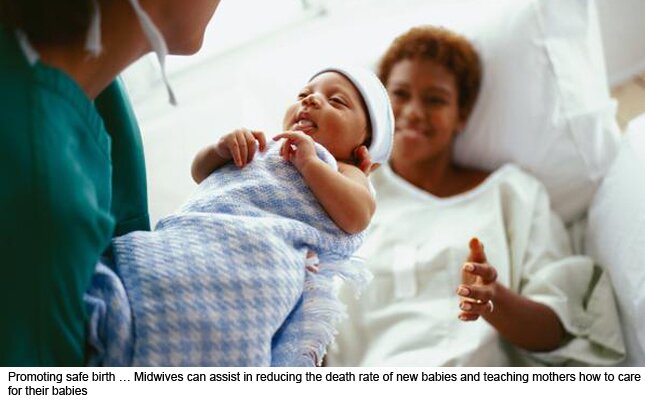
Roughly 7 500 South African babies die on their first day of their life every year and 20 200 by the first month, while 47 000 do not live to their fifth birthday
Investing in midwives and other frontline health workers has the potential to reduce the death rate of newborn babies, according to the findings of the State of the World Mothers report 2013 produced by children’s rights organisation, Save the Children.
The report, that was released last week, states that sub-Saharan Africa is the most dangerous place for a mother to give birth. Ranked 77th on the list of 176 countries, South Africa is one of the riskiest places to give birth.
The report states that 7 500 South African babies die on their first day of their life every year and 20 200 by the first month, while 47 000 do not live to their fifth birthday.
The report, which singled out the shortage of midwives as one of the major factors contributing to the high rate of newborn deaths, attributes such deaths to preterm birth, followed by infection and asphyxia (suffocation as a result of physical blockage of airways or inhalation of toxic gases causing lack of oxygen and unconsciousness).
“We need to create a mother and baby-friendly health system to deliver life-saving interventions, especially at the time of birth. We need to provide women with greater access to midwives so that all women receive quality obstetric care …,” stated the research.
These hair-raising revelations came amid celebrations of the International Midwives Day on May 5. According to the Free State department of health, the aim of the celebration was to raise awareness on the importance of the role of midwives in the promotion of the well-being of mothers and their babies.
And it has since emerged that there is a serious lack of skilled midwives in the country and Free State is no exception. “An analysis of deaths within the Free State province revealed the same trends as identified in the national reports.
The lack of a midwifery-dedicated register makes it difficult to distinguish between those with midwifery “as a qualification” and those with midwifery at heart. The province has identified a huge shortage of midwives at heart,” explained the acting health department spokesperson, Mondli Mvambi.
Mvambi added that over 287,000 women and three million infants around the world die each year as a result of preventable pregnancy and childbirth complications. Most of these deaths could be prevented if there were enough competent midwives in a well-resourced maternity environment.
It is estimated that 56 percent of maternal and newborn deaths could be prevented if women delivered with a midwife in a facility capable of providing basic emergency care. This is because a trained birth attendant or midwife can diagnose a problem and make an appropriate decision during child birth.
“To enhance the skills of those working in the labour ward, the province embarked on a massive training of management of obstetric emergencies. This assists to improve the competency levels of those working in the labour wards.
“The Free State province is also haunted by a shortage of doctors and therefore competent midwives are essential to close this professional gap,” said Mvambi.
To identify the needed midwifery skills, the province will develop a provincial midwifery register to identify competent midwives. There will also be the establishment of provincial norms for midwives, in line with World Health Organisation recommendations.
According to the State of the World Mothers report, the Democratic Republic of Congo is the worst place to be a mother, while Finland is the best. Some of the countries after South Africa are Ukraine, Algeria and El Salvador. Namibia is ranked at 121, Botswana 116 and Swaziland at 119.
Experts’ analysis shows that wider use of four low-cost products could save the lives of one million babies every year. First is a process called Corticosteroids (an adrenal steroid hormone involved in metabolism and immune response) therapy, which is also known as speeding up growth process in preterm babies to help their lungs mature. This can cost 51 cent.
Clean cord care is also regarded as a low cost means to save newborns. This is because belly button infections can be fatal for vulnerable newborn. The Chlorhexidine, an antiseptic that can be used to clean umbilical cords and belly buttons, is available for just 10 cent per use.
Fighting infection with antibiotics can also help. The deadly blood infection called sepsis is one common risk in babies. Injectable antibiotics can easily treat sepsis another severe infections for as little as 13 cents. Some babies need help taking their first breath.
A basic, resuscitation device costs just $6 (approximately R55) and has helped millions of babies who let out a cry to declare their birth. Though all these could be available in most health facilities, shortage of health workers can hinder the process of care-giving.
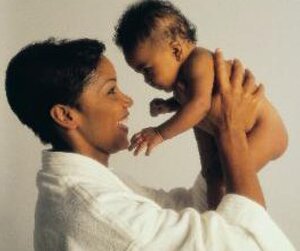 Currently there is a shortage of five million health workers, one million frontline health workers in the developing countries and 350 000 midwifery skills. Lizzy Modise is one of the thousands of women who have experienced the trauma of losing a baby.
She recently suffered a stillbirth but she is still in the dark about the cause of her baby’s death. “I lost my baby because I was not adequately informed about my condition while I was pregnant. I suspect the nurses knew that my baby was dead even before she was born, but no one said anything to me. I still do not know what was wrong with me, but I blame the care givers who did not inform me earlier about my condition.
“I think that people who work with pregnant women should be properly trained. Only then will they know how to react if they detect a problem. This would save lives of babies that die unnecessarily,” said Modise.
What is a midwife?
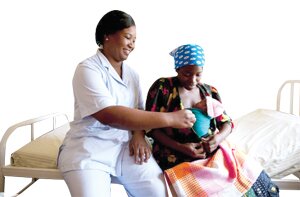 A midwife is a person who, having been regularly admitted to a midwifery educational program that is duly recognised in the country in which it is located, has successfully completed the prescribed course of studies in midwifery and has acquired the requisite qualifications to be registered and/or legally licensed to practice midwifery.
The midwife is recognised as a responsible and accountable professional who works in partnership with women to give the necessary support, care and advice during pregnancy, labour and the postpartum period, to conduct births on the midwife’s own responsibility and to provide care for the infant.
This care includes preventive measures, the promotion of normal birth, the detection of complications in mother and child, accessing of medical or other appropriate assistance and the carrying out of emergency measures.
The midwife has an important task in health counseling and education, not only for the woman, but also within the family and community.
This work should involve antenatal education and preparation for parenthood and may extend to women’s health, sexual or reproductive health and childcare, and to gain the knowledge to counteract the lack of pain relievers and antiseptics.
A midwife may practice in any setting including in the home, the community, hospitals, clinics or health unit.

Ms. K Unrestricted


Follow Us onTwitter