
UNIONS AT THE CROSSROADS
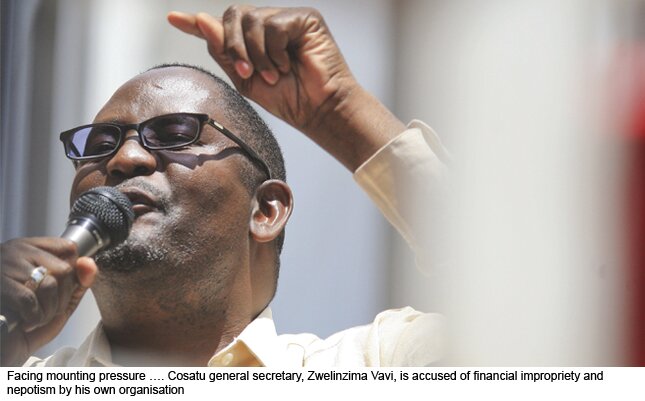
Unions have been hit by various challenges including dwindling members caused by retrenchment of workers, due to the economic recession and the failure by union leaders to properly serve their members
The South African government commemorated Workers’ Day this week by expressing its appreciation to all workers for contributing to the development of a growing South African economy.
The day was observed on Wednesday May 1, a celebration that is recognised more by trade unions than any other section of society, as it offers them an opportunity to reflect on the historical struggle to achieve fair employment conditions.
Trade unionism in South Africa has a history dating back to the 1880s. From the beginning unions could be viewed as a reflection of the racial disunity of the country with the earliest unions being predominantly for white workers. Through the turbulent years of 1948 to 1991 trade unions played an important part in developing political and economic resistance. Eventually it was one of the driving forces in realising the transition to an inclusive democratic government.
Early trade unions were often for whites only, with organisations like the South African Confederation of Labour (SACoL) favouring employment policies based on racial discrimination.
Trade unions organising blacks appeared by 1917 and within two years the Industrial and Commercial Workers’ Unions of Africa (CWUA) had been formed by people living on the streets of Cape Town.
By the 1930s the South African Trade and Labour Council (SATLC) had united much of the country. The SATLC maintained an explicitly non-racial stance, and accepted affiliation of black trade unions, as well as calling for full legal rights for black trade unionists. Some black unions joined SATLC, while in the 1940s others affiliated with the Council of Non-European Trade Unions, raising it to a peak of 119 unions and 158,000 members in 1945.
In 1946, the CNETU with the African National Congress and the South African Communist Party pushed for the African Mine Workers’ Strike to become a general strike. The strike was broken by police brutality which was part of the rise of the National Party (NP) and their slogan of apartheid as all black trade unions were violently suppressed.
“The Durban strikes constituted a defining moment in South African history. It shattered the industrial peace that had existed since the banning of the ANC, PAC and Communist Party of South Africa and the crushing of the South African Congress of Trade Unions (SACTU).
“What made the Durban strikes a turning point in South African history was that the incipient African trade union movement that existed only in embryonic form at the time managed to turn the temporary mass action of workers into a permanent trade union movement that became very powerful,” said professor of sociology at the university of Cape Town, Johan Maree on the South African History website.
They eventually grew into some of the major unions in trade union federation the congress of South African Trade Unions (COSATU) such as National Union of Metal Workers of South Africa (NUMSA), SACTWU, CEPPWAWU and SATAWU
After the 1946 strike, when worker consciousness was high and workers realised the need to belong to trade unions to become powerful, they poured into the unions founded shortly after the strikes took place. But towards the end of 1974 workers started dropping out of the unions because the unions failed to deliver concrete gains.
The leaders of the unions realised they had to change their organisational strategy. They realised that, besides leadership, unions needed to be democratic to ensure that they represented their members’ interests. Unions also needed to acquire power in order to wrench gains for workers from management.
So the strategy that the leaders developed was to build trade union power by means of democratic workplace organisation based on elected worker representatives, the shop stewards.
A new era commenced at the end of 1985 when COSATU was established. The formation of COSATU led to a complete political realignment of the trade union movement in South Africa. It rapidly established itself as the most powerful organisation in the mass democratic movement and effectively led the popular opposition and mass action against the apartheid regime during the second half of the 1980s.
Today trade unions are still an important force in South Africa, with 3.1 million members representing 25 percent of the formal work force.
The Congress of South Africa Trade Unions (COSATU) is the largest of the three major trade union federations with a membership of 1.8 million, and is part of the tripartite alliance with the ruling party African National Congress (ANC) and the South African Communist Party (SACP).
After the unbanning of the ANC, PAC and SACP in 1990 COSATU entered into a Tripartite Alliance with the ANC and SACP. It played an important role through mass action during the CODESA negotiations over the Constitution and Bill of Rights for the new democratic South Africa that came into being on 27 April 1994.
A new phase commenced after this with COSATU being in an alliance with the SACP and the ANC, the ruling party in government. This provided the trade union movement with political power it did not have before.
“The Alliance has given COSATU excessive political power in that they can effectively veto policies of the ANC government with which it disagrees. The effective scuppering of the youth wage subsidy is one example. The back-down of President Jacob Zuma from declaring education an essential industry that would prohibit strikes is another.
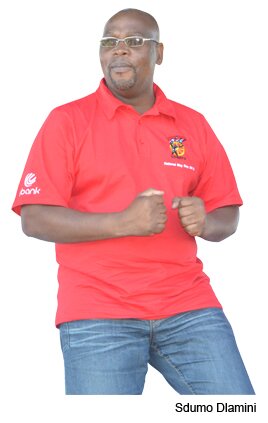 The tripartite alliance also undermines the social partnership that NEDLAC strives to create. When COSATU cannot get what it wants on NEDLAC it approaches the ANC through the tripartite alliance to achieve its own ends,” said Maree.
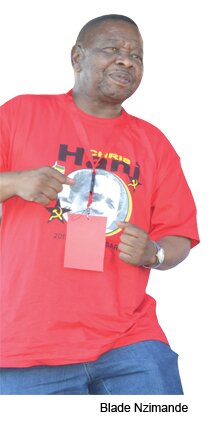
At the time when the COSATU general secretary, ZwelinzimaVavi and SACP general secretary Blade Nzimande were also at the height of power in their own organizations. A wedge grew between Vavi and Nzimande when Zuma appointed the SAC general secretary as the minister of higher education and training, which Cosatu did not approve of.
Nzimande’s deputy in the SACP, Jeremy Cronin, was appointed deputy minister of transport. Vavi has complained that the appointment of Nzimande and Cronin, who was the SACP deputy general secretary to government, would divide their focus and weaken the SACP. This angered Nzimande as he now had to consistently justify his appointment, arguing that it was an SACP decision that party leaders should take on leading roles in government.
But the real fallout came when Nzimande purchased a R1.1 million 7-series BMW as his official vehicle. Vavi was scathing in his condemnation, leading to much embarrassment for Nzimande. Their relationship has never been the same, with Nzimande feeling betrayed that his closest ally has publicly humiliated him. Vavi has continued to attack Nzimande in public platforms while Nzimande has accused him of being a populist who does not respect internal alliance protocols.
Vavi realised that the romance was over when leaders within Cosatu close to Zuma and Nzimande started campaigning to remove him as general secretary ahead of last year’s Cosatu national congress. At the September congress, it became clear that Vavi no longer had the might of the two-million strong federations behind him when he said openly that there were divisions within the trade union federation. Vavi has the backing of NUMSA while Cosatu president has the backing of the powerful NUM.
Vavi is facing an international probe by Cosatu. He investigated for, among other things, financial impropriety relating to Cosatu’s new building in Braamfontein, Johannesburg. He is also accused of collaborating with opposition parties, including the newly formed Agang, headed by activist and academic Mamphela Ramphele, and Cosatu’s rival unions, to destabilise the government and the ANC.
The secretary general has also been accused of a conflict of interest as his stepdaughter is employed by a company that works for Cosatu. Vavi has denied all the allegations against and challenged those making them to provide proof. The trade union movement faced with dwindling members, internal squabbles and a stubborn global recession seems to be at a crossroad.
Sources: South African Histroy website and Daily Marverick online.

Ms. K Unrestricted


Follow Us onTwitter