
Mthethwa urges police to utilise counselling services
 SAPS members attend pro-active programmes presented by EHW practitioners, based on identified needs; and prioritised from recurring themes and trends
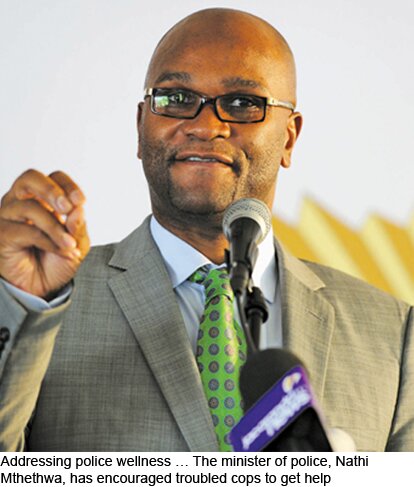
The Minister of Police, Nathi Mthethwa, has urged the police all around the country to make use of the Employee Health Wellness (EHW) program to confront psychological and emotional challenges they face at home and work.
In reponse to the parliamentary question on psychological counselling services within the SAPS, Mthethwa said police suicide rates have decreased ever since more officers voluntarily seek EHW interventions for the challenges they face both at home and in the workplace.
Mthethwa argued that policing remains a very difficult and challenging job due to the fact that police officers are continually exposed to traumatic and stressful events. He said members who are not emotionally and psychologically-equipped to handle the stressful situations suffer from serious mental illnesses and this often lead unfortunate outcomes such as suicide.
The minister said the general welfare and the psychological state of SA’s police officers indicate a police service that is fit and well except for few individual cases which get referred to the disease risk management programme for further handling and support.
Mthethwa said welfare and psychological reports were supplied by SAPS medical aid, POLMED, and the health risk manager, Alexander-Forbes. He said SAPS uses an integrated approach to EHW, serviced by qualified, experienced and registered psychologists, social workers and chaplains.
“I have already emphasised the need to have a concerted focus on the psychological welfare of SAPS officials and we have begun engaging external role players with a view to assist through a number of different forums.”
However, Mthethwa said due to the violent nature of crime in South Africa and advanced criminal activities there is a need for more research to be done as far as the wellness of police is concerned.
“Clearly there were outlined referral processes between the different professionals and between EHW and medical schemes, guided by the needs of the employees and their immediate families,” added Mthethwa
Mthethwa said SAPS members attend pro-active programmes presented by EHW practitioners based on identified needs prioritised from recurring themes and trends. He added that that there was also a psycho-social network of external providers that offer psycho-social interventions to members and their immediate families.
SAPS members have access to a 24-hour call centre services where they get one on one telephone counselling and individual trauma debriefing. The call centre staff members are also available for face-to-face counselling.
“Groups are dealt with through group trauma debriefing, team building interventions and organisational diagnosis processes. But it is my view that we need to look at how we can enhance this programme,” added Mthethwa.
“As the ministry of police, we want to highlight this reality to all South Africans so that as they criticise police, they should do so having a comprehensible understanding of environments within which police operate,” ended Mthethwa.

Ms. K Unrestricted


Follow Us onTwitter