
THE TEENAGE PREGNACY CONUNDRUM
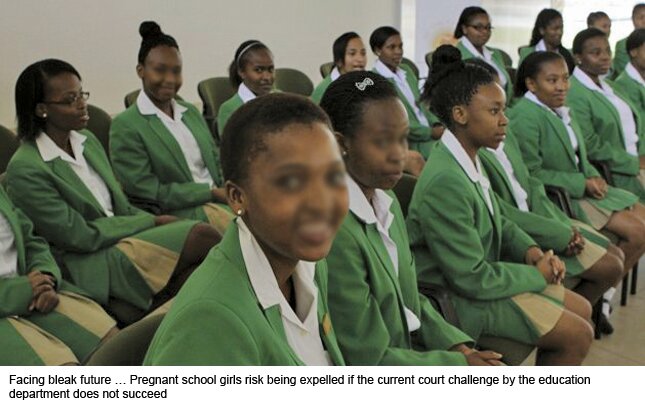
The current age of consent in South Africa is 16 years. This means even if sex with a minor is consensual, it is still illegal
Andiswa Qhai was just 15 years old when she fell pregnant with her first child and dropped out of school. She was too ashamed to go back school and her parents prohibited her from returning to the classroom.
When she did do back two years later, she started at standard five (Grade 7), and finished high school at the age of 24. Her life seemed normal but she had to work to sustain her child and her family. Her mom was a single parent struggling to raise five children. In those days, years social grants were not available for impoverished families. People had to eke out a living.
Qhai landed a job as a domestic worker, earning less than R1 000. She was already a bread winner at 24, with a seven-year-old child to care for. She missed out on her childhood. But, with a high school education, she could get have acquired skills that could have helped her improve her life. This was during the Apartheid era.
Then, out of the blue, a certain firm was looking for young people to train in information technology; the minimum requirement was Grade 12. Qhai qualified and that was how she got her big break in life. She is now an IT specialist.
There are no guarantees that a teenage girl who falls pregnant while at school will make a success of her life.
“It was a very traumatic experience but I learned from the bitter consequences of my actions. I lost out on my precious childhood; I grew up quickly. But I made a choice to also leave school for two years because I felt guilty.”
“My parents expressed their disappointment and hurt in their own way. Everyone involved had a right to express their emotions; no one was either wrong or right. I knew nothing about the expulsion policy at my school; it never crossed my mind,” Qhai told The Weekly.
Teenage pregnancy is still a social problem, but the difference now is that it is discussed openly. In Qhai’s case, it was also statutory rape under South African law. Both Qhai and her mom did not know about this.
The Sexual Offences and Related Matters Amendment Act 32 of 2007 also known as Sexual Offences Act, states that children, who engage in certain acts such as kissing, cannot be prosecuted for doing so. But both must agree to such acts and their age difference must not be more than two years.
However, the law forbids two children aged between 12 and 15 years old to engage in consensual sex. If found they will both be charged with statutory rape. The current age of consent in South Africa is 16 years. This means even if sex with a minor is consensual, it is still illegal.
Statistics show that teenage girls are sexually active within and outside the legal age. The result is unplanned pregnancies for young girls.
It is against this backdrop that two schools in Welkom and Harmony in the Free State have adopted expulsion policies that allow the school to banish teenage girls who fall pregnant. It does not say anything about boys who become fathers.
 These policies are under scrutiny because child rights activists regard them as discriminating against young girls.
In microcosm, this is evidence that apartheid continues to rear its ugly head in a modern, free and democratic South Africa which puts a premium on respect for human rights.
Centre for Child Law attorney Karabo Ngidi argues that the policies are invalid and unconstitutional. The Centre bases its position on the best interests of the child principle Section 28(2) of the Constitution and International law on the importance of the right to education.
“Furthermore there are clear international laws obligations on South Africa to ensure that girls who become pregnant are not discriminated against or denied an education. The policies in question disregard these obligations,” Ngidi told The Weekly.
The centre was amicus curiae (friend of the court) in a matter that was recently brought before the Constitutional Court. The dispute was between the Free State department of education’s Head of Department (HOD), Stanley Malope, and the two schools. It was to be established whether the HOD could tell the schools not to act in accordance with policies.
The Centre also submitted that should the policies not be found unconstitutional, injustice will have been done to hundreds of children who are currently pregnant or become pregnant while in school.
The schools argued that he could not do so while the HOD argued that he could because the actions of the schools were violating the leaners constitutional rights.
The policies of the schools provide that a learner who is pregnant, or has reason to believe that she is pregnant, must immediately report herself to a senior female member of the staff appointed by the principal for that purpose.
Added to that, the learner may not return to the school in the year that the child is born. Other learners were also required to inform the appointed staff member if they suspect that a learner is pregnant.
The National School Governing Body (NSGB) Secretary, Monokoane Hlobo said, although governing bodies have the power to make policies, these policies must not contradict the constitution of this country.
“It is unfortunate that this kind of policy will deprive children the right to education. I think there are schools that want to take us back to the apartheid era. All people should respect the constitution of the Republic and any policy and regulation.
“It is an act of sabotage against the democratic government. I want to emphasize that there are people who still practice the apartheid ideas,” Hlobo told The Weekly.
The Human Rights Commission (HRC) in the Free State declined to comment on this issue.
“We are not in position to provide you with any substantive input as the pregnant learner matter is pending before the Constitutional Court. We cannot pre-empt the outcome or make any public pronouncement on the case and will await the decision of the court,” said Buang Jones from the HRC.

Ms. K Unrestricted


Follow Us onTwitter