
Wetlands – nature’s coy life support
Wetlands are key water resources that form a sponge source to most of the surface waters that ultimately run down the streams; they release water of better quality
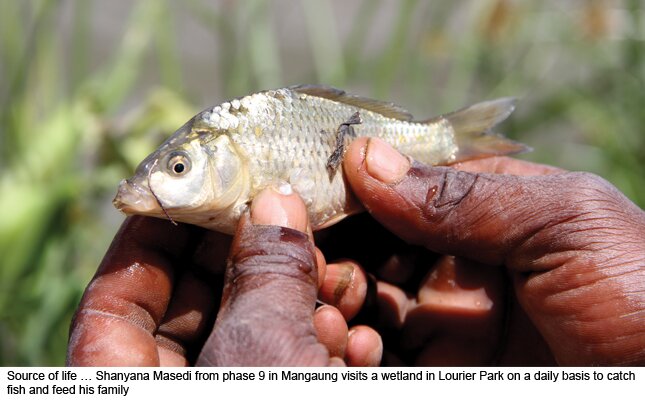
Shanyana Masedi of Phase 9 in Mangaung is a regular visitor at a supposed wetland in Lourier Park, Bloemfontein.
He depends on it for a constant supply of freshwater fish. And it pains him when people dump all sorts of pollutants, some of which could be toxic, in the water because, to him, it represents a source of livelihood.
“I have been fishing in this wetland since I was a young boy. I find this place soothing and therapeutic. It is my family’s source of food.”
Wetlands are defined as parts of land with maximum capacity water either permanently or seasonally and they primarily consist of soil, which supports aquatic plants. The water found in wetlands can be saltwater, freshwater or brackish.
South Africa provides a home for local and most importantly, international migratory birds, on wetlands and it has more than 20 wetlands that have been placed in Ramsar Convention, the convention on Wetlands of International Importance that was established in 1971 in Iran.
The main wetland types include swamps, marshes, bogs and fens and they play a number of roles in the environment, principally water purification, flood control and shoreline stability. The wetlands are also considered the most biologically diverse of all ecosystems serving as home to a wide range of plant and animal life.
The wetlands play an important role in insuring a steady supply of clean water to the people as they purify water at no cost. The wetlands also helps slow down the flow of water when there are floods and then they release the water in dry seasons.
Water Research Commission (WRC) research manager Bonani Madikizela said the division called Water-Linked Ecosystems has prioritised and funded research on wetlands covering various aspects, such as the Wetland Management Series, and produced a total of 11-volumes on how to rehabilitate degraded wetlands in the country.
Madikizela said there are numerous plants found in wetlands, and a study has been made to produce identification guidelines, which are made to be practical, user-friendly and helpful to communities, students and researchers.
He explained that a research made by the WRC shows that the mapping of wetlands nationally needs urgent attention in terms of protection due to sensitive habitats and species occurring in them.
Madikizela stated wetlands are key water resources that form a sponge source to most of the surface waters that ultimately run down the streams, they release water of better quality than when it flowed into the wetland and they do the process through normally dense vegetation, sediment accumulation and pollutants are held back in these habitats.
Wetlands become particularly important in releasing water slowly during periods of droughtsand also reduce the force of flooding water by reducing the damage of downstream properties.
“The wetlands can play a huge role in people’s livelihoods in many ways, by providing water for cultural purposes, drinking and grazing livestock, attracting tourists and generating revenue. Reeds can be used to produce mats, bags, etc. and also produce of food crops, especially in areas with more shortage of water.”
“As water drains from the surrounding catchment of a wetland, it reaches through the wetland slowly due to grown vegetation preventing any fast flow and then tends to get retained in a sponge wetland, before it finally drains out. The numerous points, called gauging weirs that exist in the rivers across the country, provide data on how much water passes those points at any point in time. Some wetlands are part of those rivers,” said Madikizela
He added: “Currently more than 140 000 wetlands have been identified in the country with many more still to be identified while more than 50 percent is estimated to have been lost; hence so much effort is put on rehabilitation by various organisations led by Working for Wetlands.”
The South African National Biodiversity Institute (SANBI) conducted a research which indicates that wetlands support plants and animals that are specially adapted to live in the area and cannot survive at any other place; they also provide feeding, roosting and breeding sites for a range of other species.
 The spokeswoman of SANBI, Pontso Pakkies, said wetlands are not easy ecosystems to map at a broad scale as they are numerous, often small and difficult to recognise and outline on remotely sensed imagery such as satellite photos.
“Although they are high-value ecosystems that make up only a small fraction of the country, they rank among the most threatened ecosystems in South Africa. Since its inception, the Working for Wetlands programme funded by the department of water and environmental affairs has invested R530-million in the rehabilitation of 906 wetlands since it started in 2001,” said Pakkies.
Pakkies said the project has improved or secured the health of more than 70,000 hectares of wetland area, in the process providing employment opportunities by employing 2.2 million persons.
She said, in line with the emphasis of the Expanded Public Work Programme (EPWP) on training, Working for Wetlands has provided 168 400 hours of training in both vocational and life skills to teams made up of a minimum of 60 percent women, 20 percent youth and a percent of people with disabilities, then men.
“Recent independent evaluations have confirmed that benefits from rehabilitated wetlands include improved livelihoods, protection of agricultural resources, enhanced biodiversity, cleaner water, reduced impacts from flooding and increased water security.”
Pakkies noted that the social benefits provided by Working for Wetlands are employment, training, enterprise development and the dignity of decent work. She said Working for Wetlands also houses the National Wetlands Inventory (NWI) project which aims to provide clarity on the extent, distribution and condition of South Africa’s wetlands.
The partnership and collaboration between the NWI and the National Freshwater Ecosystem Priority Areas (NFEPA) project has produced sufficient data on the extent and diversity of wetlands. The project clarifies how many and which rivers and wetlands have to be maintained in a natural condition to sustain economic and social development, while still conserving freshwater biodiversity.
The NFEPA project has used the NWI’s data to produce the most comprehensive national wetland map including about 300 000 wetland units covering a total area of 2.9 million hectares, or 2.4 percent of South Africa’s surface area.
Although a systematic national survey of wetland loss is on-going in South Africa, recent studies revealed that 65percent of the country’s wetland types are under threat, 48 percent is critically endangered, 12 percent endangered and 5 percent vulnerable.
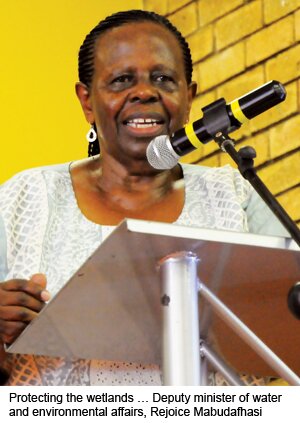
The deputy minister of water and environmental affairs, Rejoice Mabudafhasi launched the NFEPA atlas in 2011, which enables the planning of wetland rehabilitation on a catchment scale on the South African NBA information. According to the 2011 National Biodiversity Assessment (NBA), only 11 percent of wetland ecosystem types are well protected, with 71percent not protected at all.
During the World Wetlands Day celebrations at Kareedouw in the Eastern Cape last Friday, Mabudafhasi underscored the importance of wetlands and highlighted the need to protect and conserve wetlands in line with this year’s theme of “wetlands and water management” and the slogan “wetlands take care of water.”
SANBI scientist, Namhla Mbona, said mapped wetlands cover about 3.5 percent of the total surface area of the Free State province, 0.8 percent of which has been rehabilitated under Working for Wetlands.
“There are many wetlands and I believe that there are still more that have not been identified yet in the Free State as the mapped areas have only been captured in the Eastern Free State.”

Ms. K Unrestricted


Follow Us onTwitter