
CHILD ABUSE – A VICIOUS CYCLE
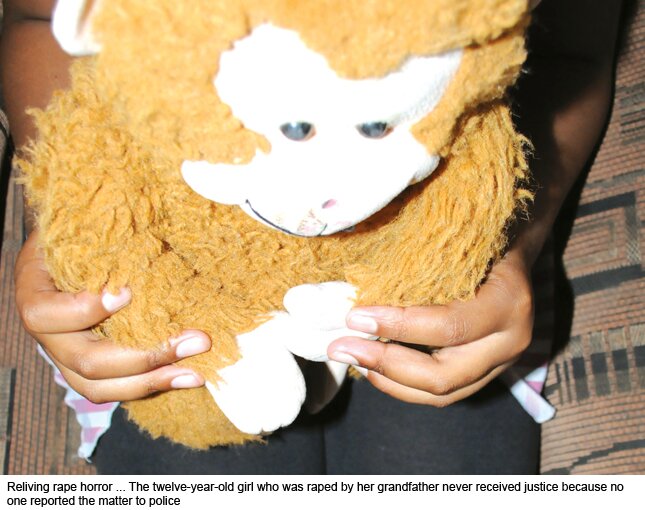
Child abusers threaten their victims with violence if they speak out and this prevents children from reporting the abuse either to parents or teachers at school
Child abuse has evolved from a mere concern to an urgent crisis, with 1 075 cases having been reported to the Free State department of social development from April 2011 to April 2012. And this figure is regarded as a tip of the iceberg as a lot more cases go unreported.
Disturbingly, with the curtains having been drawn on the 16 Days of Activism of Violence against Women and Children, the latter are never given a platform to relate their own experiences, fears and concerns.
As a result, their stories remain untold and they are only treated as statistics. These statistics tell us the rate of violence against children aged 0 to 18 years old has ‘increased astronomically’ in the past two year in all provinces. Most of these children are from the poorest households and are even more vulnerable to abuse.
Abuse can take form of physical, sexual and emotional abuse. There were 100 000 cases of ill-treated children reported to the police in 2009/2010, 450 of which were reported in Free State.
Twenty nine percent of sexual offences in the country involved children age 0 to 10 years old.
The acting senior manager at the children’s unit of the department of social development, Makgotso Motsemme-Mosetlhe said sexual abuse and child neglect were the two most forms of abuse prevalent in the province.
“Protection of children should be the responsibility of all departments. As a department we work together with other departments. We have contracted non-governmental organisations and community-based groups to assist in identifying and implementing programmes to handle identified cases.”
These statistics reveal the reality of hardships children have to encounter growing up. These are future adults who will have to participate in a democratic society but are not equipped to do so by society.
Some grow up in extremely autocratic hierarchical environments thus internalizing undemocratic lessons and experiences. The problem is that most adults are not held accountable for their action towards children, and children hardly have a say in determining their interaction with adults.
If abused, their voices are kept within the walls of social services and people hardly ever hear them speak.
According to an East African non-government organisation dealing with children’s rights, Kuleana, childhood experiences leave a deep imprint that regulates the imagination and belief in the possibility of democratic participation.
“Leaving out children has enormous implications. Even more significant, effects will come to light when the children grow up. They will follow the patterns of their childhood, which means they too will be authoritarian and deny their children the opportunity to have something to say about their lives.”
The Child Protection Act of 2005 ensures that everyone from the non-governmental organisation, parents and communities take a legal responsibility to protect and care for children.
 But the children’s voices are also suppressed by their abuser. Sometimes these perpetrators are people known and close to the children and they threaten them into silence. This is the reason we have incidents where an adult will tell a story of rape while they were still young. This is also due to an upbringing that does not allow children to express themselves.
The Weekly spoke to a 12-year-old girl who was raped by her grandfather under the supervision of her parents.
“I knew what he was doing was wrong because I was told that no one has the right to touch me if I did not want that. But because he was big (an adult), it did not matter whether I kicked and screamed, he got his way. He choked me and held me against the wall. He ripped off my underwear and threw me on the bed. He then raped me,” the child related.
The child managed to escape and alerted her relatives but this case was never reported. After a year, relatives decided to seek help but were told that there was no evidence to prove that the
grandfather had raped the child. This case was thrown out of the court. The child has bladder injuries and is still traumatised by this incident.
Child abuse threatens their victims with violence if they speak out and this prevents them from reporting the abuse either to parents or teachers at school.
Colonel Lindiwe Matela said the family violence, child protection and sexual unit (FCS) of the police encourage children to speak out.
“We want them to listen carefully in court because we do not want to lose cases on technicalities. Most of the time we fetch victims from their homes and take them to court; this also serves to give them moral support and make them feel comfortable around us.”
“And if the lawyer is intimidating the witness, the magistrate will always call him to order. In most of our cases we have attained life imprisonment sentences for abusers, and this is the only unit in the whole of South Africa that get life imprisonment sentences convictions,” said Matela.
Matela said the current generation of children speak out because they are taught at school to break the silence.
“They know their rights and they know when they are violated. So they report any violation to their parents or teachers.”
“However, some parents sometimes do not listen, and they simply dismiss children. This is wrong; parents must be their children’s friends and encourage them to speak about everything happening in their daily lives,” said Matela.
The importance of encouraging children to express themselves and listening to them cannot be over-emphasised.
Adults who are too busy to pay attention easily dismiss things that are very important to children. This way, children’s self-esteem is eroded and thereby participation will be stifled. The reality is that patterns set in childhood outlive all others.
Adults often proclaim “children are the future” or “children are the nation of tomorrow,” yet they do not act on these phrases; they are nothing but hollow words.
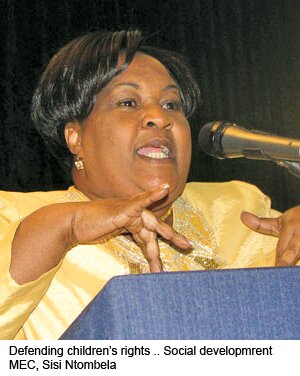
The MEC for social development, Sisi Ntombela summed it up effectively when she says:
“If we want a country with a better future, we must work hard to stop the abuse of children. It is our business to ensure that the killing, raping and abuse of our children comes to an end.”

Ms. K Unrestricted


Follow Us onTwitter