
SEXUAL HARASSMENT RAMPANT
Sexual harassment can include: touching, rude gestures; undesirable sexual jokes; unwanted questions about sex life; sex requests and staring at a women’s body in a distasteful manner
Sexual harassment in the workplace is the most underreported crime in the country. In most cases, victims are women who are controlled by male superiors, who intimidate them using various forms of sexual harassment.
Sexual harassment can be defined as any unwanted attention of a sexual nature that takes place in the workplace. It is also any kind of sexual behaviour that makes a woman feel uncomfortable. It includes touching, whistling, rude gestures; unsolicited sexual jokes; unwelcome questions about a woman’s sex life, request for sex and staring at a women’s body in an offensive way.
According to different researches, women in workplace can be intimidated by various forms of sexual harassment that discourage them from feeling at home at work. This intimidation can also be used to gain sexual control over an employee by her senior. These cases go unreported because of fear to lose ones job or favours.
The Police and Prison Civil Rights Union (POPCRU) spokesperson in Free State, Rankele Msinto, estimates that 80 percent of sexual harassment cases go unreported to the police and correctional services departments. He said the last time he had someone complaining about sexual harassment was in 2008.
“No formal complaints have been received for the past few years. The trend is that women officers will be asked sexual favours in return for promotion or other benefits. The victim will concur and if the relationship fails, this is when they will be crying foul.
“But in some cases the reality is that sexual harassment is like rape. Victims usually do not come forward because they feel embarrassed and they end up not opening cases against perpetrators,” said Msinto.
South Africa will be joining the rest of the world in observing the 16 days of no violence against women and children.
The campaign runs for 16 days from November 25 to December 10, which is the International Human Rights Day, but its objectives are implemented through a year-long programme and a national plan to combat abuse. Though the focus will be violence again women in general, sexual harassment in workplace remains one of the untapped topics.
Police crime statistics show that 64 514 sexual offences were reported from April 2011 to May this year. There are no specifics given on sexual harassment on workplace.
POPCRU is not unaware of any of their members who have opened a criminal case against a colleague or superior over sexual harassment, but it insists the phenomenon does exist.
However, The Weekly spoke to women who were asked not be named about their experiences of sexual harassment in the workplace.
Some said, although they felt they had been violated after such encounters, they also got what they wanted. But most of them felt that they were taken advantage of, but they all ended up unemployed or opting for different jobs.
“I was a breadwinner at home and if I lost my job; who would have provided for my family? But I left due to pressure. My manager started asking me to work till late, calling it over-time and said I will be rewarded handsomely.
“At first it was just that, until one day he called me to his office. I thought he was going to give me feedback on my job. As soon as I entered his office he looked at me in an uncomfortable manner. I asked him what was going on. He then complimented me on the outfit I was wearing,” the unemployed mother disclosed to The Weekly.
This woman did not give in to the demands of sexual favours and she ultimately lost her job after she was overloaded with responsibilities and finally left due to frustration. She lost benefits such as the Unemployment Insurance Fund (UIF), which an employee forfeits if they leave their job voluntarily.
“I am now unemployed; not because I was incompetent at work, but because I did not agree to sleep with my boss,” she lamented.
The International Labour Office (ILO) has published the sexual harassment at work fact sheet. The document said the long term consequences of sexual harassment are enormous. They include rehabilitation costs, dependence on welfare benefits and need to be retrained as effective employee. The employee could bear legal and criminal justice expenses to fight her unfair dismissal.
The National Union of Mine Workers (NUM) shared its experiences in dealing with this challenge. It said most women give in and ask for help later when things get out of hand.
“This is a tough industry where women are required to work underground sometimes. But these women avoid doing so, to achieve this they get into a sexual relationship with a supervisor. In return, this man will treat her differently from other employees and give her access to company resources such as cars,” said the NUM women structure deputy chairperson.
“But these relationships do not usually last and these women end-up being bitter. They will find means to spite their mate including reporting him to a union. This is how we find that there were sexual relations that are no longer regarded as harassment because the women agreed to it,” said Monye.
South African laws brand harassment as an unfair discrimination because it results in a violation of human right. In the workplace it ends up in poor morale amongst employees, causes unexplained absenteeism, late-coming and poor concentration. It was named as one of the causes of loss of productivity and major cause of workers resigning.
Because it also constitutes unfair discrimination, it falls within the jurisdiction of the Employment Equity Act.
The Commission for Conciliation, Mediation and Arbitration (CCMA), a body established to resolve labour disputes, provides needed information on their ‘harassment information sheet’. The affected employee is advised to confront the perpetrator directly with witness when this had happened. After exploring all internal avenues, a criminal or civil case can be opened.
Trade unions and gender activists have welcomed the landmark Cape High Court decision in 2005 which said employers have a legal responsibility to protect workers against sexual harassment.
Former Naspers Magazine Printers secretary Sonja Grobler won what lawyers described as one of the most extensive lawsuits about employers’ responsibility to stamp out sexual harassment. But it took four years from the launch of her R11.8-million damages case to judgment.
 Justice Hennie Nel ruled that Naspers (now Media24) was liable for damages, because it failed to protect Grobler from the harassment of employee, Gasant Samuels, and failed to create an environment in which employees’ rights to dignity were preserved.
He awarded her just over R200 000 and asked for more details of her loss of income for which she is claiming R10-million.
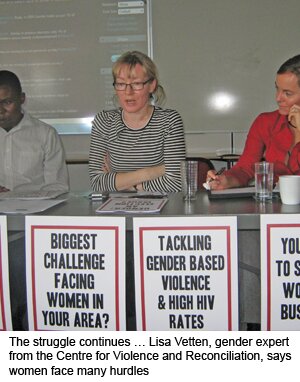
Lisa Vetten, gender expert from the Centre for Violence and Reconciliation, said there were many hurdles women needed to clear in winning such cases and the law was not necessarily working for them.
Vetten was referring to four year period it took for Grobler to win the case.
“But one must acknowledge what implications the decision has for the future. It is putting a certain amount of pressure on employers, telling them these are the consequences companies face for ignoring complaints.”
The judgment coincided with the finalisation by parliament of the Sexual Offences Bill.
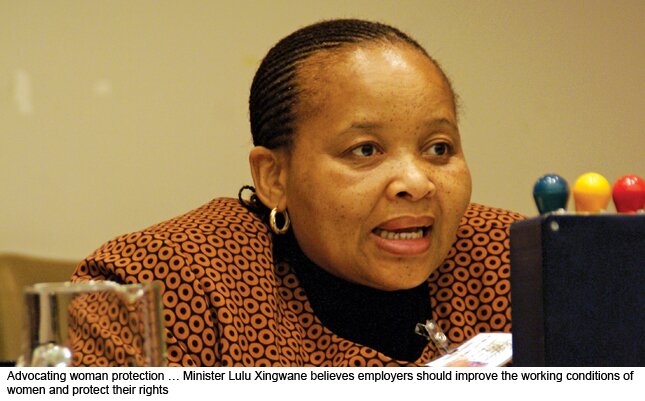
Minister of women, children and disability, Lulu Xingwana, who was the chair of parliament’s committee on the status of women, said sexual harassment, was included in the definition of sexual abuse as set out in the Sexual Offenses bill.
“I think (the judgment) was an important finding and I hope in future it will not take so long to take such cases seriously. I think it is a decision that will improve the working conditions of women and protect their rights in the workplace,” said Xingwana at the time.

Ms. K Unrestricted


Follow Us onTwitter